
Chelsea City Directory Collections
Chelsea Public Library Historical Archives is the main local shelf for these historical volumes. Its guide records originals from 1847 through 1995 and microfilm from 1847 through 1933 in the adult reference room. A directory usually lists adults over 18 with an address and occupation, which makes it useful for family research, an old storefront, or a dated street question. The archive range describes the collection as a whole, not proof that every yearly issue survives. Check the requested year before making a special trip.
| Collection | Years | Where Held | Access |
|---|---|---|---|
| Chelsea historical volumes | Originals 1847-1995; microfilm 1847-1933 | Chelsea Public Library Historical Archives | In person, one item at a time |
| State Library Chelsea holdings | Selected issues from 1847-48 through 1946 | Massachusetts State Library | Confirm the issue through its holdings guide |
| Chelsea, Revere & Winthrop directory | 1908, regular edition no. 33 | DPLA, Internet Archive, and Chelsea Public Library | Digitized scan and OCR, then image check |
| Telephone directories | North suburban Boston, 1978-present | Chelsea Public Library | Reference and archive access |
The State Library list is especially helpful when a year is uncertain. It identifies surviving Chelsea issues such as 1847-48, 1850, 1852, 1856, 1858, 1860-61, then many later editions through 1946. Gaps in that list are research facts, not permission to assume a missing household left town.
Chelsea Archives Since 1970
The library Historical Archives began in 1970 and holds far more than its Chelsea directory run. Its materials include newspapers, photographs, maps, atlases, municipal publications, Board of Aldermen and School Committee minutes, budgets, ordinances, high-school yearbooks, and local research files. That mix lets a reader test whether an address in a directory matches the building, street, or public event of the period.
- 1847: The local original directory run begins.
- 1847-1933: The adult reference room’s microfilm run covers these years.
- 1970: Chelsea Public Library instituted its Historical Archives.
- 1995: The archive’s recorded original directory range reaches this year.
Archive use has practical limits. Visitors sign in, show valid identification, use one item at a time, and keep material in the building. Access is generally available during library hours, while evening research requires an arrangement. The archive is free; the guide says extended staff research is $10 an hour for up to two hours, and microfilm-reader printing has a fee. These rules are why it helps to bring the exact surname, street, and likely years.
Note: Record the title page, issue year, and page with every Chelsea entry so another source can be checked later.
Chelsea City Directory in 1908
The digitized 1908 Chelsea, Revere and Winthrop volume is a practical starting point when a family appears in the years around the city fire. DPLA describes the 1908 issue as regular edition no. 33, contributed by Chelsea Public Library and linked to an Internet Archive scan. Its OCR can speed a surname search, but street numbers and names need confirmation on the page image.
Chelsea Public Library’s digital collections provide the local route into digitized historical materials.
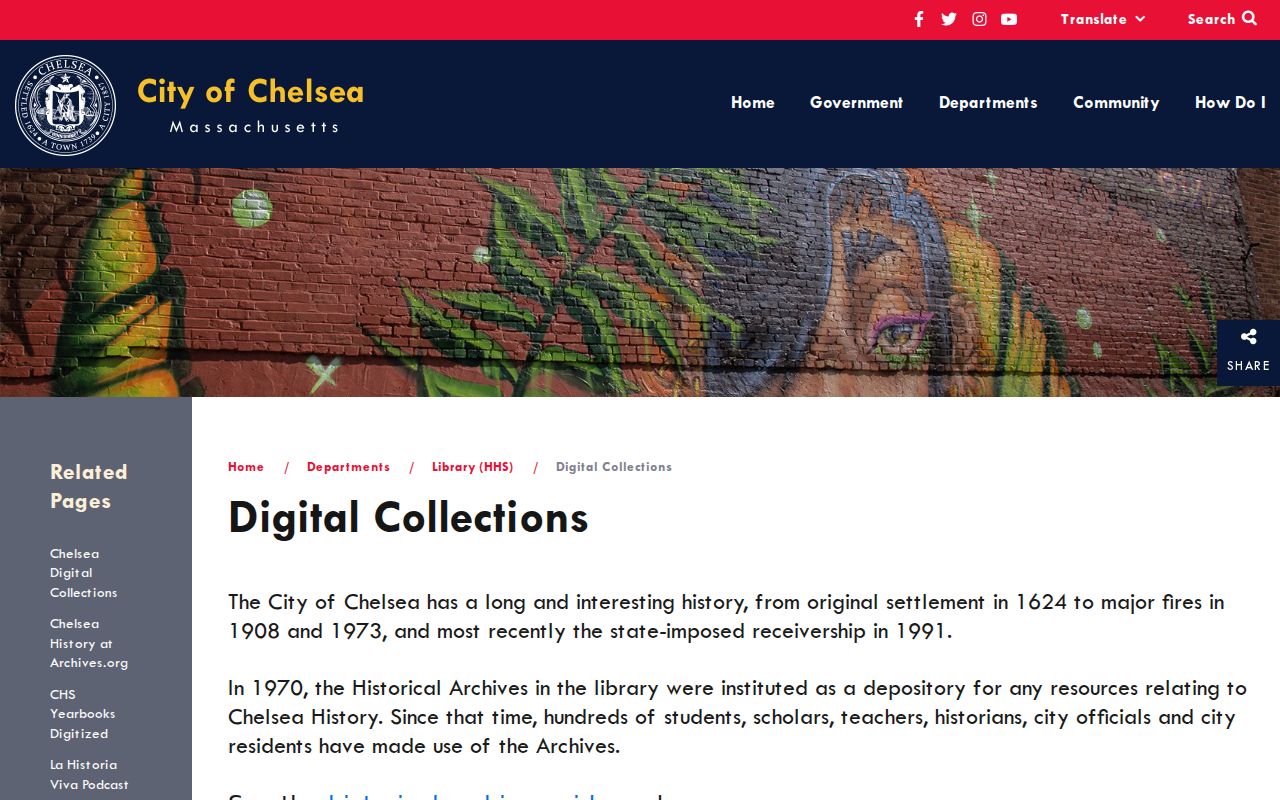
The library's digital work complements the physical reference shelf. A scan is a useful first reading, while the archive copy, maps, and newspapers can settle a hard-to-read entry or address.
Reading a Chelsea City Directory Entry
An entry in the Chelsea run is an abbreviated record, not a modern profile. The 1908 volume can show a surname, given name or initial, honorific, occupation or business, home address, a work-location parenthetical, and a spouse or widow note. The volume has an abbreviations page, so copy its key before treating a short label as a fact. In this run, h means home, bds means boards, rms means rooms, wid means widow, carp means carpenter, cond means conductor, and emp means employed.
| Name | Surname, given name or initial, and sometimes an honorific or cross-reference. |
|---|---|
| Occupation | Work or business, sometimes with an employer or location in parentheses. |
| Address | Home marked h, or a boarding or rooms notation such as bds or rms. |
| Family notation | Spouse or widow wording that can supply a relationship lead. |
| Cross-reference | A prompt to compare another name, business, or address entry before deciding it is the same person. |
- Criss-cross directory
- A street-order directory that can begin with an address rather than a surname. A dedicated Chelsea run was not located in the official sources.
- Householder index
- An index arranged around a household or address, useful only when the specific volume includes one.
- Abbreviation key
- The explanatory page in a volume that defines its shorthand. Photograph or transcribe it before interpreting the entries.
Chelsea City Directories Beyond One Shelf
Catalog trails can fill a gap when the local archive lacks an issue. The Massachusetts State Library published a Chelsea holdings list with specific years, and its digital-collections program added an AM Quartex companion in June 2026 alongside the continuing DSpace repository. Catalog systems can change without changing the underlying item, so search by title, place, and year rather than assuming a prior link is gone.
The University of Pennsylvania Online Books catalog trail also points to early Chelsea and neighboring-town directory material.
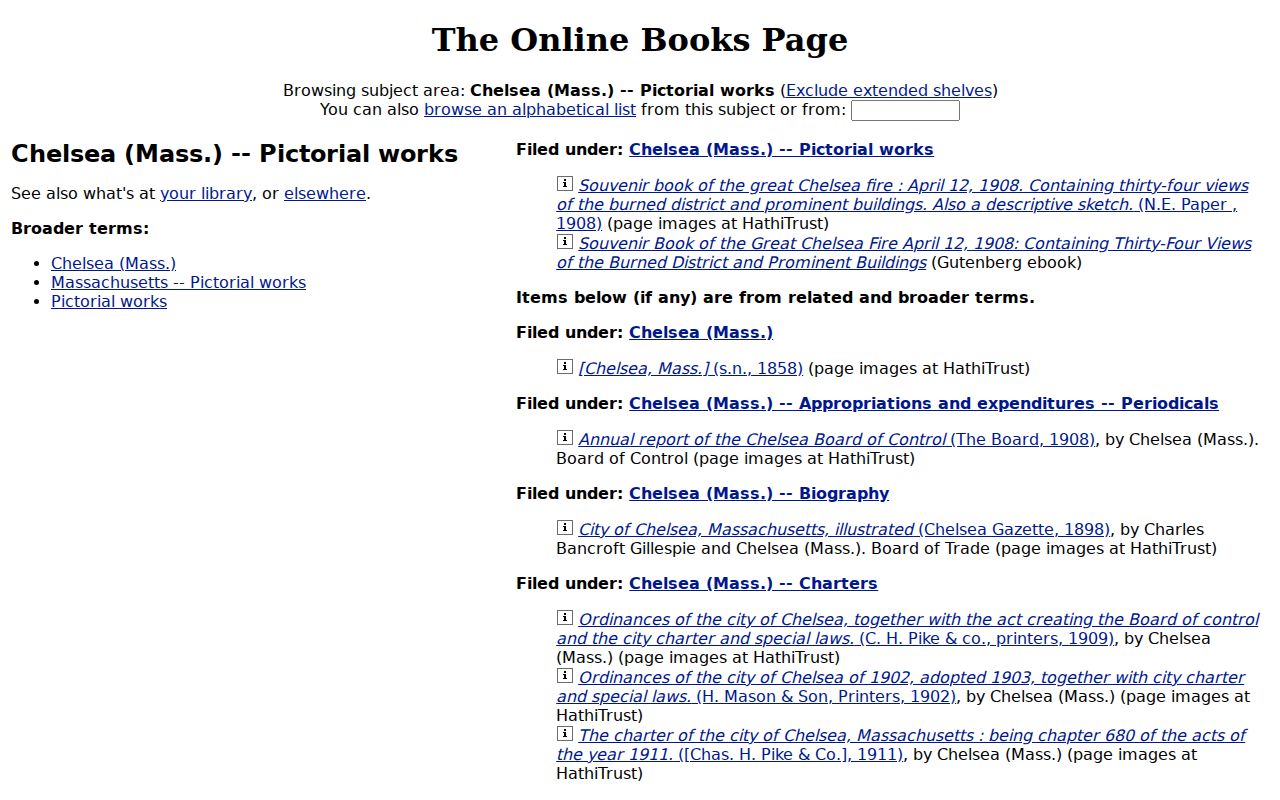
Neighboring-town titles can matter because the 1908 volume covers Chelsea, Revere, and Winthrop. Verify the municipality and issue before copying an entry into a Chelsea family timeline.
Chelsea State Library Catalog
Massachusetts State Library digital collections are another official discovery route for changing catalog systems.
The State Library image is a reminder to preserve a full citation: title, edition, year, holding institution, and page are more durable than a search result alone.
Chelsea City Directory Gaps in Print
A missing yearly volume calls for a different local source, not a guessed move date. Chelsea Public Library has Chelsea Telegraph & Pioneer microfilm from 1855-1906, Chelsea Gazette microfilm from 1886-1941, Chelsea Record microfilm from 1925-1997, bound Record material from 1939-68, originals from 1996 onward, and Chelsea Weekly News from 1976-1990. A dated notice can support or challenge a directory address, a marital note, or an occupation.
The library reports a microfilm printing fee, while archive access itself is free. No standalone official Chelsea obituary index was located, so the strongest local obituary path is the correct newspaper and year, paired where useful with probate or a cemetery inquiry. The newspaper result remains a historical lead until its date and identity details align with the directory entry.
Chelsea City Directories Around Fires
Chelsea’s 1908 and 1973 fires are documented in the library guide through clippings, photographs, maps, and original research. They are useful dates for an address question, but the research does not support claiming that a fire destroyed Suffolk land records. Instead, compare directory entries around the event with a newspaper item, atlas, deed, and later assessor evidence. A number that disappears may reflect a rebuilt block, a changed building, a different listing style, or a household move.
The 1894 Library of Congress Sanborn map is a 38-sheet public-domain snapshot of pre-modern Chelsea building use and layout. It can test whether the place described in an old entry fits the block before later changes. That is a local story worth recording alongside a full historical-source citation.
Tracing Chelsea City Directories Across Years
Family history gains strength when each directory year is treated as a dated observation. Begin with the most recent available issue for a known name and street. Save the spelling, initials, household notation, occupation, and street number exactly as printed. Move backward one surviving issue at a time. A gap, changed abbreviation, or different house number is a question to test, not a conclusion about the person.
- Find the surname and street in one Chelsea volume, then save its page and the abbreviation key.
- Check the prior and next available editions for spelling, address, occupation, and relationship changes.
- Search the street index when the volume provides one, but do not promise a reverse directory that was not located.
- Pair the dated entries with the federal census. The latest complete released federal census is 1950 under the 72-year rule.
- Test an unexpected move or disappearance against a deed, atlas, Chelsea newspaper, probate docket, or vital-record route.
For current parcel and address evidence, the Chelsea street directory focuses on the modern address-keyed sources. That is a different task from reading historical volumes, although the old address can be the bridge between them.
Note: A person absent from one directory may have moved, gone unlisted, used a variant name, or fallen in an issue gap.
Chelsea City Directory Community Memory
Yearbooks and the People of Chelsea archive offer a human companion to a historical entry. The library’s digitized yearbooks can help reconnect a former classmate to a school year, while People of Chelsea contains searchable photos and interviews with neighbors, artists, officials, students, old-timers, and immigrants. Neither is a current-address index. Their value is the dated community context they add to a name already found in a volume or newspaper.
People of Chelsea is the library’s searchable community-memory archive.
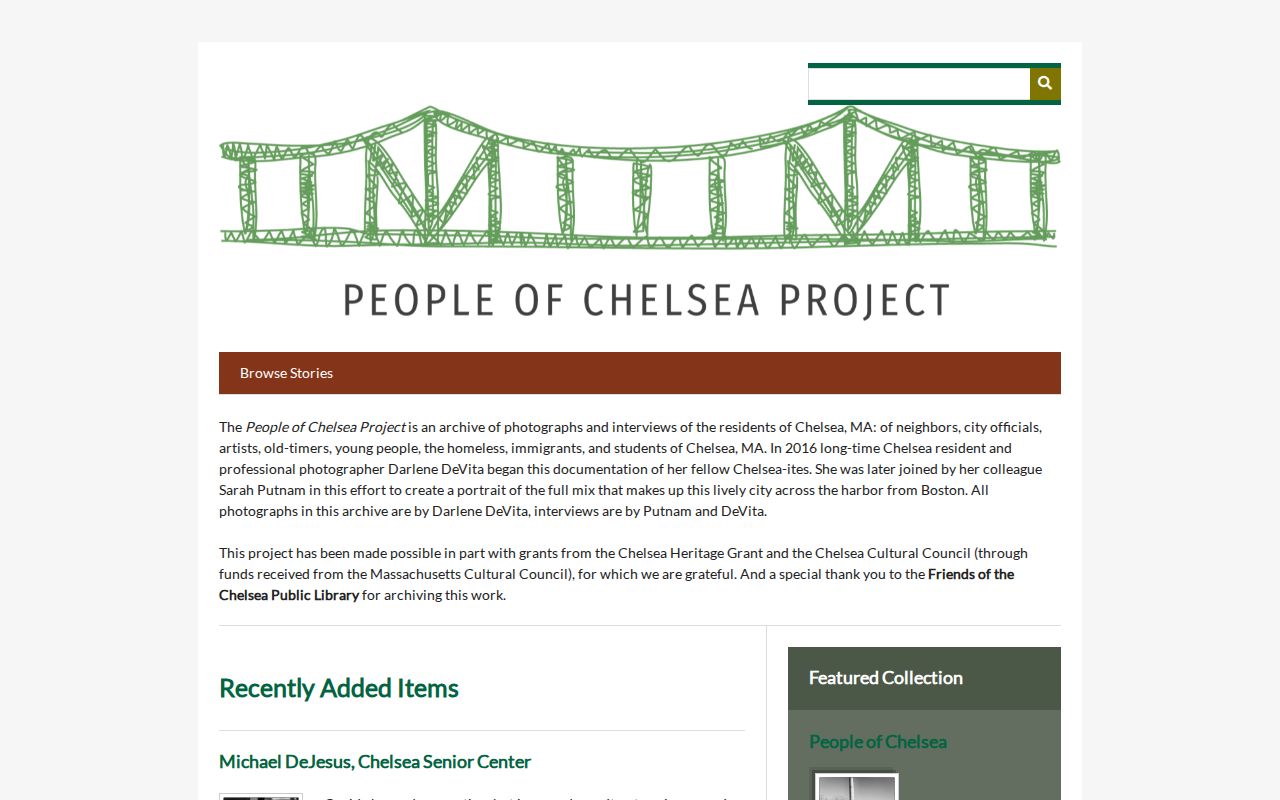
Use a photograph or oral-history item as a source with its own date and description. It can corroborate a neighborhood connection without turning an archival appearance into a claim about present residence.
Chelsea City Directory Research Changes
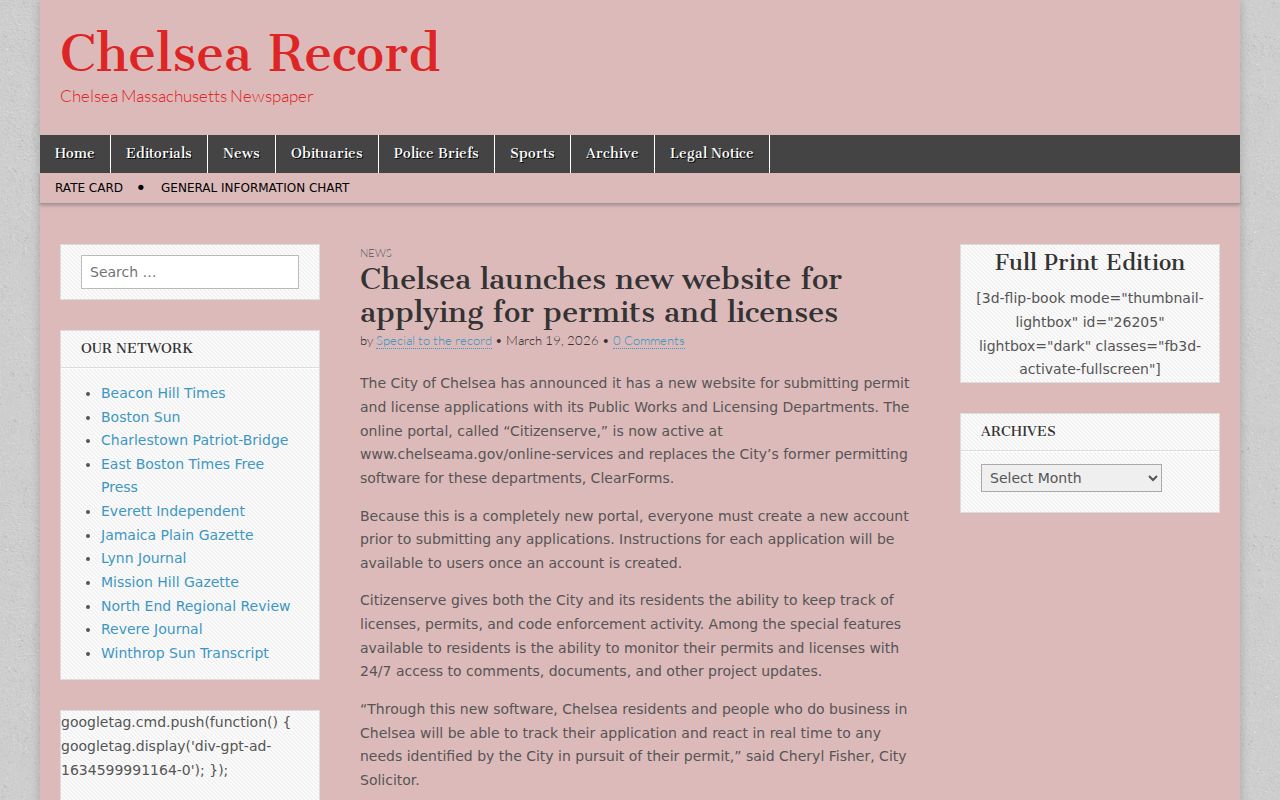
Modern local-record portals can move even when historical collections remain in the same archive. A March 2026 report described Chelsea’s online-services transition for Licensing and Public Works, while the city’s current Inspectional Services page directs building and inspection work to OpenGov. For a historical directory question, begin with the library collection and use an agency portal only for the specific modern record it actually holds.
The Chelsea Record report on the online-services change documents that split.
Keeping the custodian and date attached to each source prevents a portal change from being mistaken for a change in historical collection coverage.