
Chelsea Previous Residents by Era
A Chelsea address-history search needs an era table before it needs a name list. The current Chelsea assessor parcel gives a starting address and ownership clue. The Suffolk Registry then supplies Chelsea recorded land instruments. Chelsea's local directories, newspapers, and maps add household context, while census releases and probate can answer narrower historical questions. Their dates overlap unevenly, so a gap between sources should be recorded rather than filled with an assumption.
Start with the Chelsea source closest to the suspected period. A recent Chelsea ownership transition belongs in MassLandRecords. A mid-century Chelsea household question may be better served by a directory and newspaper. For an older Chelsea building, use maps and a legal description to see whether the address still represents the same place. The source table preserves the separate roles of title, occupancy clues, building context, and family-history endpoints.
| Address source | Years represented | Custody and access | What it can show |
|---|---|---|---|
| Suffolk Recorded Land name index for Chelsea | 1973 to present, with 1970-72 verification/reindexing notice | MassLandRecords and Chelsea Registry counter route | Indexed grantors/grantees, instrument date, book/page or document, and available image links |
| Suffolk deed-book images for Chelsea | At least Book 194 from 1800 onward | Portal search route for Chelsea and Registry | Parties, legal description, terms where shown, and plan references, without a complete name index |
| Chelsea assessor and GIS | Vision FY2026 page; ArcGIS FY2023 sample | Assessor, Vision, and official GIS | Current owner, situs and mailing fields, parcel, building, sale, and Registry references |
| Chelsea city directories | Originals 1847-1995; microfilm 1847-1933 | Chelsea Public Library Historical Archives | Adult name/address entries, household clues, occupations, and street index material |
| Federal census for Chelsea households | Released through 1950 under the 72-year rule as of 2026 | National Archives/Census and Chelsea library genealogy access | Household, relationship, age, birthplace, occupation, and enumeration geography |
| Chelsea newspapers and Sanborn map | Newspaper runs vary; Sanborn is 1894 | Chelsea Public Library and Library of Congress | Notices, obituaries, fires, building footprint, lot, and use context |
Chelsea telephone directories documented at the library begin in 1978 for north suburban Boston and are supplementary rather than a guaranteed yearly Chelsea run. A dedicated Chelsea reverse-directory run was not located. For Chelsea address history, use the known city-directory and map collections instead of promising a reverse list that the research did not confirm.
Start Chelsea Address-History Research
Begin with the current parcel worksheet, even when the goal is a much older Chelsea address. Record the situs address, `MAP_PAR_ID`, owner field, owner mailing address, fiscal year, last-sale book/page, Registry ID, plan ID, and the date the source was checked. The Chelsea property database presents current assessment material, and the official ArcGIS layer exposes a companion schema for address, owner, sale, map, and building fields.
Do not merge the Chelsea fields. Situs is the property location. The owner mailing address is tax correspondence for the Chelsea parcel and may be outside Chelsea or associated with a trust, business, or public entity. `LS_BOOK` and `LS_PAGE` are useful bridges to the Chelsea Registry, but the deed itself is the record that explains the transfer. This first line makes later claims about past residents traceable to an address and source date.
Chelsea Deed Chain for Past Owners
Chelsea title research moves backward one recorded transfer at a time. At the Suffolk MassLandRecords portal, a Property Search starts with Recorded Land, street number, and street name. Then compare the Chelsea parcel's current owner with a Name Search in the Grantee role. Open the Chelsea purchase deed and capture the instrument type, recording date, book/page or document number, parties, legal description, plan reference, and consideration when the instrument shows it. The seller is the next person or entity to search as a grantee.
That Chelsea address process produces a chain of ownership, not an automatic list of everyone who lived there. A trust, corporation, condominium, or estate must be searched under the entity name as printed in the instrument and, where useful, with individual names in the deed. The Registry's guidance for Chelsea searches says numeric-leading condominium names are indexed with the number moved to the end.
- Copy the current parcel fields and its last-sale or Registry reference into a dated worksheet.
- Run the address through Recorded Land Property Search and open the matched purchase deed, if one is available.
- Record the grantee as the buyer and the grantor as the seller, plus the legal description and plan reference.
- Search that seller in the Grantee role to find the earlier acquisition. Repeat the same capture steps for every transition.
- When the online name index ends or a result is incomplete, shift to Book Search, Unindexed Property Search, older index options, or the Registry counter.
- Grantor and grantee
- The grantor transfers an interest; the grantee receives it. In a backward search, the earlier seller is often the next name to locate as a prior buyer.
- Chain of title
- The linked sequence of recorded transfers for one property. It is a title trail, not a proof of household membership.
- Legal description
- The deed's land description, often tied to a plan, lot, metes and bounds, or other formal reference. It can outlast a changed street number.
The screenshot from the Massachusetts land-records hub shows the official land-records route used to extend a Chelsea address trail.
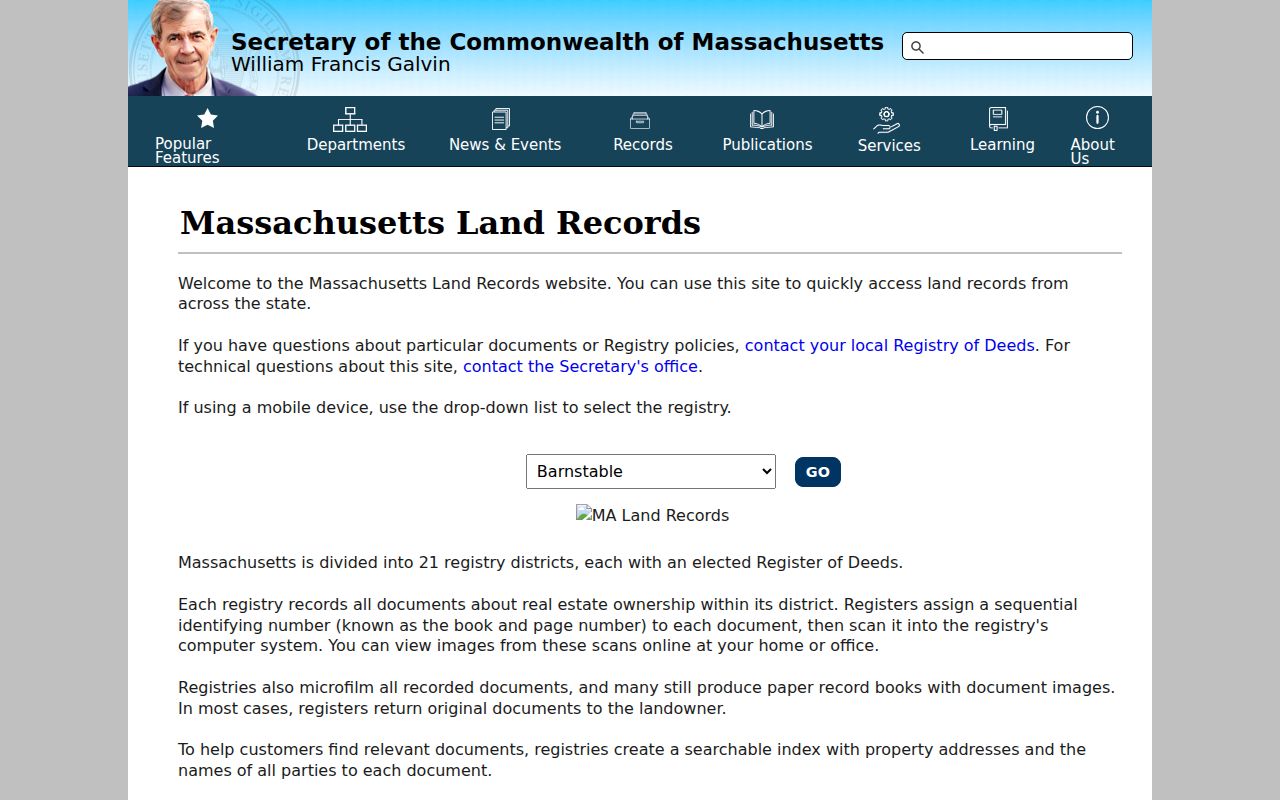
Read the Chelsea instrument image and its index fields together, then preserve the book/page or document reference for the next link in the chain.
Chelsea Previous Residents Before 1973
The central number in a Chelsea ownership search is 1973. Suffolk's online Recorded Land name index for Chelsea begins around that year, while 1970 through 1972 are subject to a verification or reindexing notice. Earlier book images for Chelsea reach back to Book 194 from 1800, but older images do not create a full searchable name index. The absence of a name hit therefore does not establish that the ownership record is absent.
Use the legal description for the Chelsea address, town, map/lot, book/page, plan reference, or Unindexed Property Search to cross the divide. The Registry's Chelsea recorded books, counter research, and phone or email route are the documented fallback. Registered Land also has separate certificate and document search paths and may have its own unindexed gaps. This is a numbers-based records limit, not a claim that Chelsea lacks earlier property history.
Note: Try a Chelsea hyphenated address both as a whole number and as separate numbers, and omit a street suffix when the older form is uncertain.
Chelsea Directory Years by Address
Deeds are only one layer of a Chelsea address story. Chelsea Public Library Historical Archives keeps original Chelsea city directories from 1847 to 1995 and microfilm from 1847 to 1933. Most entries name Chelsea adults over 18 and may include an address, occupation, spouse or widow note, and abbreviations such as `h`, `bds`, or `rms`. Those entries are period evidence. They should not be read as a modern occupancy claim or as proof that every person in a household appears.
Pair one available Chelsea directory year with the nearest released census year, then test the Chelsea address in a newspaper, deed, or atlas. Federal census releases reach 1950 under the 72-year rule as of 2026. The census can add household relationship and age context, while the directory offers a street-address convention. The detailed collection inventory belongs with the Chelsea City Directory; here, the volume is used to bridge a particular address trail.
A useful Chelsea sequence is address or legal description, parcel and deed, directory entry, census release, newspaper or map, then the next available directory year. Keep an unavailable year as a gap. Names in Chelsea records can vary through initials, maiden or married names, diacritics, and OCR mistakes, so inspect the page image before rejecting a close result.
Chelsea Map Context for Past Residents
The Chelsea Public Library Historical Archives Guide is the documented house-history fallback. The archive requires in-person use, one item at a time, an ID and log, with staff assistance available. Its atlases from 1874, 1886, 1896, 1911, and 1914, plus city maps from 1943 through 1986, can test street configuration, property ownership, lot size, and building form. Extended staff research is listed at $10 per hour, with a two-hour maximum.
The 1894 Library of Congress Sanborn map supplies a 38-sheet Chelsea snapshot of building footprint, use, and block context. It is not an occupant directory. Use it to test whether a building or lot configuration fits a period, then look back to the directory, newspaper, or deed for names. The library archive was instituted in 1970 and preserves the maps, directory, fire, receivership, newspaper, and municipal trails that make this cross-check possible.
Chelsea Address Continuity Gaps
Chelsea's 1908 and 1973 fires, later redevelopment, and uncertain older numbering mean an address can fail even when the underlying place survives. No authoritative citywide street-renumbering or renaming list was located. Use a legal description or map-lot, old cross streets, adjacent properties, directory street index, and recorded plan to bridge a suspected change. Compare 1908, 1910, and 1912 directory context when a modern number does not appear in the earlier period.
A fire mention should not become a claim that land records were destroyed. The research found no single courthouse-fire loss event for Suffolk land records. Treat fires as a reason to compare the building, street, map, newspaper, and deed evidence more closely. A changing building configuration can explain why a familiar address looks different, but it does not supply a missing name.
Past Households at a Chelsea Address
Directory entries, census releases, and newspaper notices can add a household layer to past residents research, but each has a defined scope. Chelsea newspapers provide the local obituary route when searched by title and date: Telegraph & Pioneer microfilm runs 1855-1906, Gazette microfilm 1886-1941, Record microfilm 1925-1997 with 1939-68 bound material and originals from 1996 forward, and Weekly News 1976-1990. Archive access is free, while microfilm printing has a fee. No dedicated official Chelsea obituary index was located.
Probate can provide an estate representative or heir lead. Suffolk Probate & Family Court records are docket-dependent, and restricted or impounded material remains unavailable. Use the Suffolk Probate & Family Court and its Register for case-specific access instead of treating a docket as a complete file. An obituary or probate item is an endpoint for a historical trail, not a current-address record.
The FBI Boston deed-fraud warning is a reminder to verify book/page and document references directly with the Registry rather than rely on unsolicited record claims.
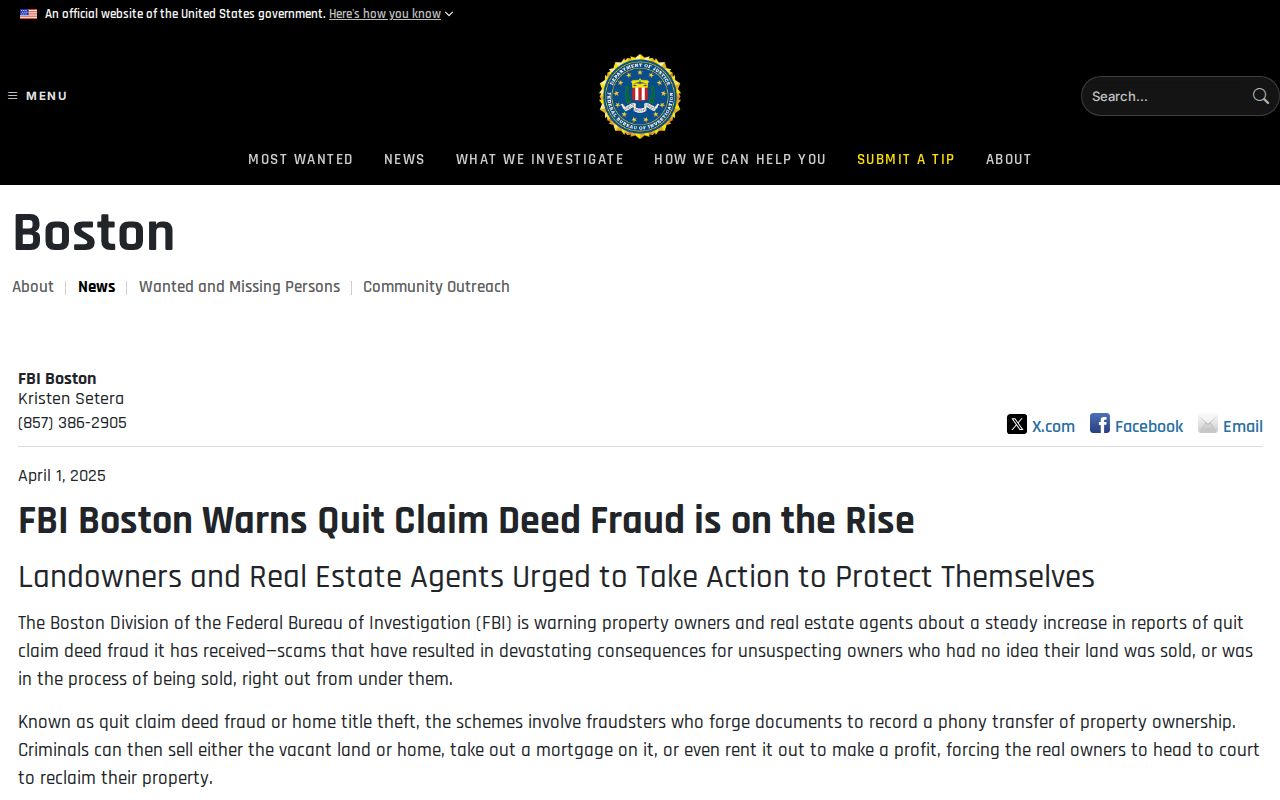
Direct Registry verification protects the address trail from a mistaken or fraudulent transfer claim.
Lawful use. Use Chelsea address-history records for lawful house history, family history, estate research, or personal curiosity. Do not use a record to stalk, harass, or harm any living person.